Word Lists for the Win!
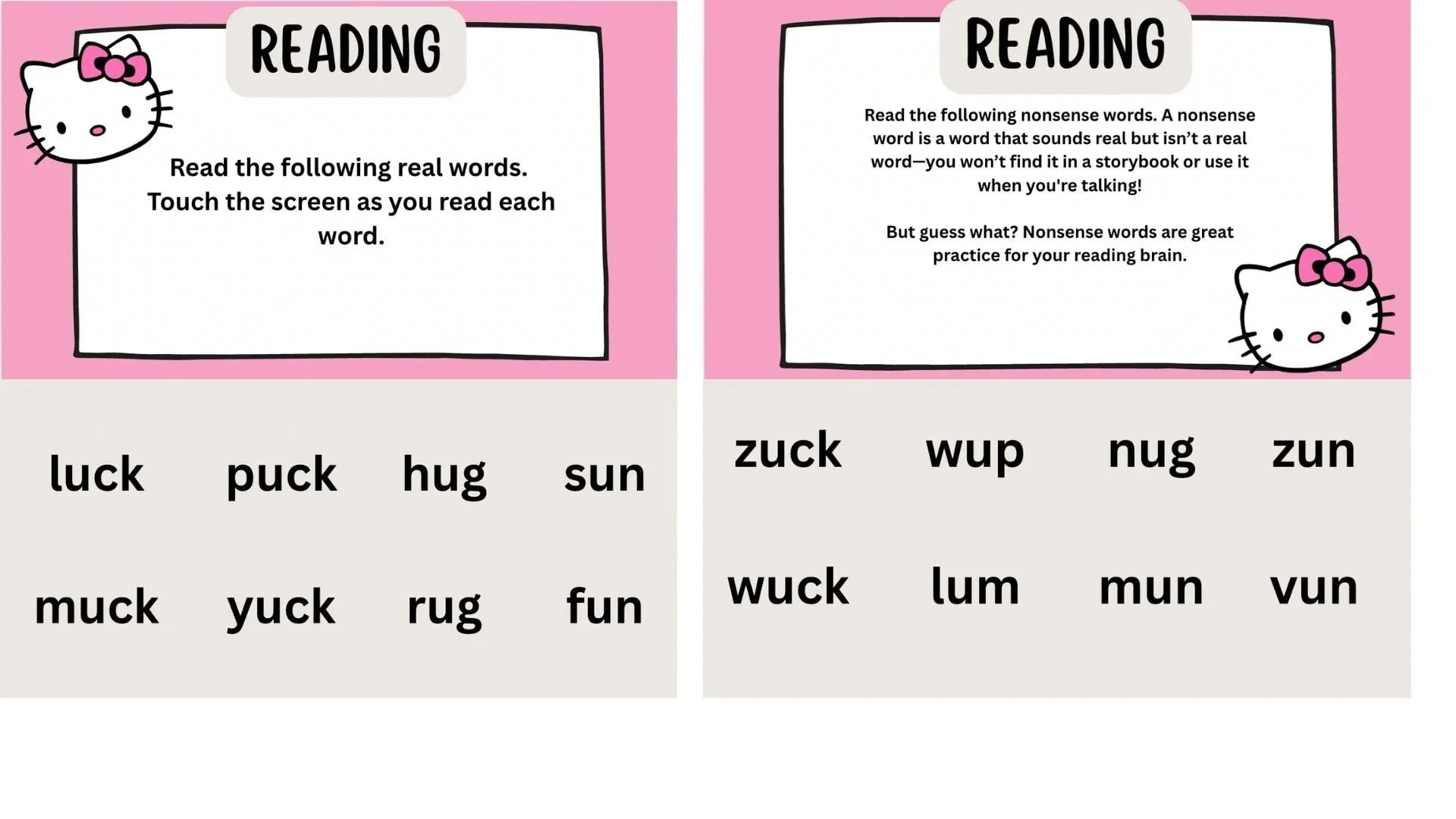
When kids are learning to read, practicing with word lists, both real words and silly “nonsense” words actually gives them a huge boost. Word lists let them focus on the sounds and patterns in words without getting distracted by pictures or trying to guess what the word might be.
Real words help kids see patterns they’ll use all the time, and nonsense words make sure they’re really using their decoding skills instead of memorizing. It’s like a little workout for their reading brain.
This kind of practice builds automaticity which means their brain starts recognizing patterns faster (hello, Science of Reading!) When kids can decode words accurately and confidently, they understand what they’re reading so much better later on.
So before we jump into leveled readers, we start with word lists. It gives kids the solid foundation they need to become strong, confident readers. And that’s a winning combo!
A Time and Place for Leveled Readers...
Leveled readers have a place. They’re great for giving kids lots of exposure to different topics, fun stories, and colorful pictures. They help kids build background knowledge, spark curiosity, and enjoy reading. Leveled readers can help kids start to build comprehension skills by thinking about a story, making predictions and starting engaging conversations.
However, they’re not the best thing to start with when kids are actually learning how to read in kindergarten or first grade. Early on, kids need practice with word lists and decodable texts so they can learn how to sound out words instead of guessing from pictures or memorizing sentences.
So yes, we can use leveled readers to enrich their world and get them excited about books. We just don’t want to rely on them as the main tool for teaching them to read. Word lists and decodable practice give them the solid phonics foundation they need… and then leveled readers can help make reading feel magical.
...but Make ‘em Decodable!
And when we do introduce books with early readers, they should ideally be decodable, meaning the words in the book actually follow the phonics rules the kids have already learned. If kids are learning in a step-by-step, systematic phonics program (which is what we want), then their books should match that.
So if they’ve just learned digraphs like sh, th, ch, wh, their reading should include those patterns because those are words they can truly sound out using the skills they already have. That way, reading feels doable, not frustrating or guess-y.
It’s like handing them a recipe with ingredients they already know how to use. The right decodable books help kids feel successful, build confidence, and reinforce the exact skills they’re learning.
Below you will see an example photo of both a real word and nonsense word list used with a student (who happens to like Hello Kitty!) She was working on a review of short vowel u words and /ck/.